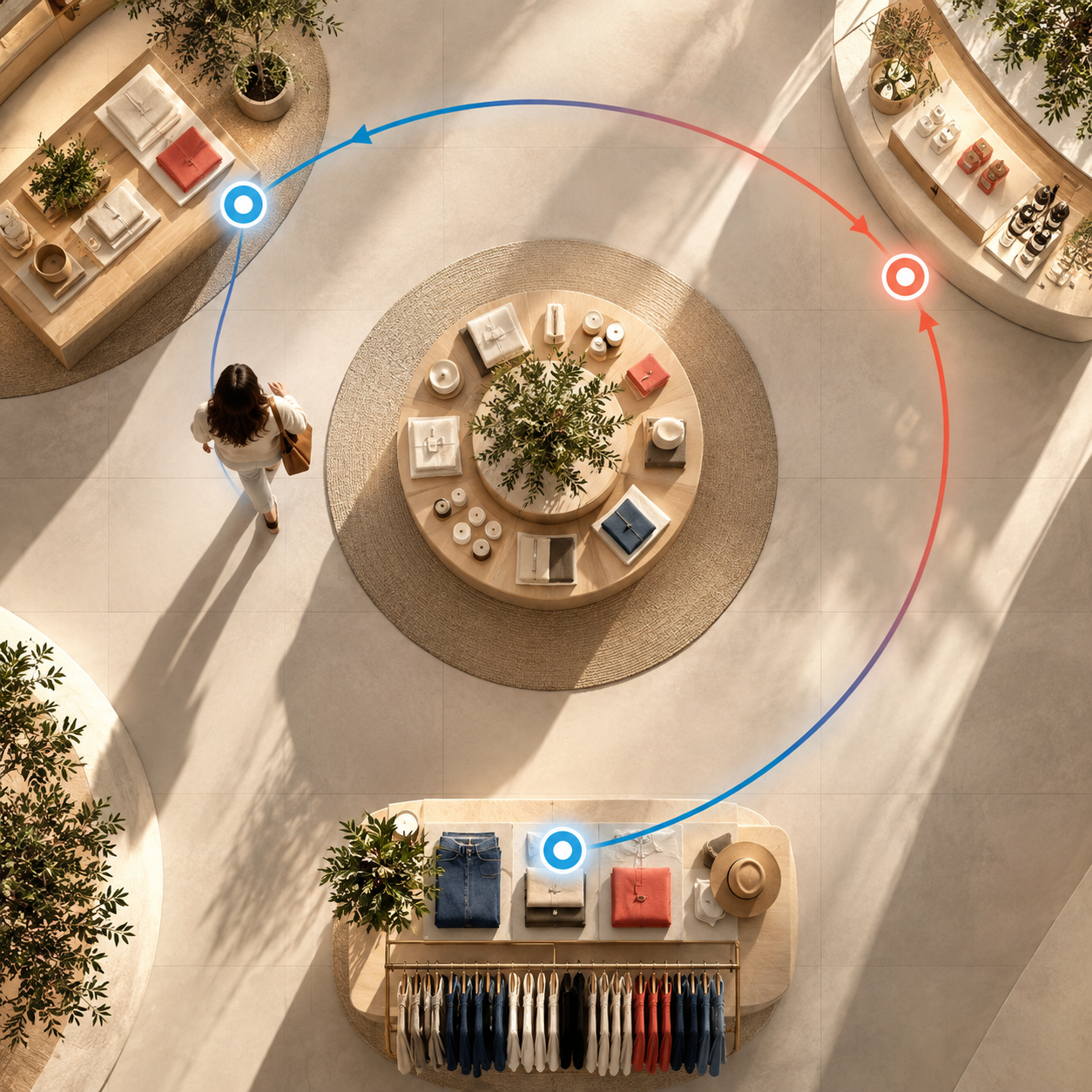
Guiding Shopper Discovery Across Physical Spaces
Guiding Shopper Discovery Across Physical Spaces
Brands have spent the last two decades perfecting digital discovery. Websites recommend products based on browsing behavior. Search helps customers find exactly what they're looking for. Personalized content surfaces products that might otherwise go unnoticed. Every click helps shape the next interaction.
The goal isn't simply to make products easier to find. It's to help customers discover more than they planned to.
Physical spaces haven't evolved in quite the same way. Walk into a store and, for the most part, every customer experiences the same layout, the same signage, and the same displays. The environment is carefully designed, but it's largely static. Whether you're a first-time visitor looking for one specific item or a loyal customer browsing for inspiration, the experience is almost identical.
As brands continue investing in stores, events, hotels, restaurants, and other physical spaces, there's an opportunity to rethink discovery beyond maps and aisle signs.
Every Visitor Is Following a Different Path
No two customers walk into a store for the same reason. One person knows exactly what they want. Another is buying a gift. Someone else is comparing products before making a decision online, while another shopper simply wandered in because something in the window caught their attention.
A single physical space might be serving visitors who are:
- Looking for a specific product.
- Shopping for someone else.
- Exploring a new collection.
- Comparing products before making a purchase.
- Browsing with no particular goal.
- Visiting for the first time.
They're all entering through the same front door. That doesn't mean they should all have the same experience once they're inside.
Discovery Is More Than Navigation
Helping someone find the right aisle is only one part of discovery. The best physical experiences also encourage exploration.
A retailer launching a new collection may want more shoppers to visit that department. A grocery store may want to introduce seasonal products. A hotel might highlight amenities guests would otherwise overlook. An event organizer may want attendees to explore sponsor booths or attend another session before they leave.
Those aren't navigation problems. They're discovery opportunities.
Instead of hoping visitors notice a display or read a sign, brands can actively encourage people to explore different parts of a physical space, creating experiences that feel more engaging for customers while supporting business goals at the same time.
Physical Spaces Can Become Interactive
Imagine a store with multiple touchpoints throughout the shopping journey rather than a single interaction at the entrance. Just as every page on a website offers another opportunity to discover something new, different areas of a physical space can do the same.
A touchpoint near the entrance might welcome first-time visitors and help them get oriented. Another in a featured collection could unlock an exclusive offer. One near a product display could answer common questions or connect shoppers with an associate. Another could introduce products customers may never have considered exploring on their own.
Throughout a single visit, shoppers could:
- Unlock a promotion in a featured department.
- Discover a new product collection.
- Receive recommendations based on what they're shopping for.
- Connect with an associate or AI agent for help.
- Learn more about products beside a display.
- Continue exploring another area of the store through a new incentive.
Discovery becomes something that happens throughout the experience instead of only at the beginning.
Every Touchpoint Builds on the Last
What's interesting isn't just that a customer interacts with multiple touchpoints. It's that those interactions can all be connected.
Someone might begin by asking where to find running shoes. Later they unlock an offer in the fitness department. Before leaving, they ask whether a particular jacket comes in another color.
Those aren't three separate interactions. They're one conversation.
Each touchpoint adds context about what the customer is trying to accomplish, making every interaction more relevant than the last while giving the brand a better understanding of the shopper's interests and intent.
Making Physical Discovery Conversational
That's the thinking behind the Phygital Cookie.
Instead of treating it as a single entry point, brands can place multiple Phygital Cookies throughout a physical space, creating a network of conversational touchpoints that guide discovery from beginning to end. One tap might unlock a promotion. Another might answer a product question. Another could introduce a new department or connect someone directly with an associate or AI agent.
Because every interaction happens within the same SMS conversation, the experience feels continuous no matter where someone is in the store. Customers don't have to download an app, scan different QR codes, or start over every time they want help.
As those conversations continue, Sotto's Active Listening learns from what customers naturally share along the way. Questions become context. Interests become preferences. Individual interactions become a richer understanding of the customer over time.
Digital experiences have become remarkably good at guiding discovery.
Physical spaces can do much more than point people in the right direction. They can encourage exploration, create meaningful conversations, and continue building the customer relationship with every step someone takes through the space.