The Real World Is Having a Comeback
The Real World Is Having a Comeback
For years, the conversation around consumer behavior seemed to move in one direction.
Shopping would become digital. Restaurants would rely more on delivery. Meetings would move online. Every new technology promised to make physical experiences a little less important than the ones happening on a screen.
Much of that happened. Ecommerce reshaped retail, streaming replaced movie nights, and almost anything could be ordered with a few taps on a phone.
But convenience turned out to have an unexpected side effect.
The easier it became to stay home, the more people began valuing the experiences that required them to leave it.
Walk through a busy shopping district on a Saturday afternoon, look at the popularity of local markets and live events, or try booking a table at a restaurant everyone wants to visit. Consumers haven't rejected digital experiences. They've simply been reminded that some things are better in person.
For brands, that's a meaningful shift because physical experiences are no longer just places where transactions happen. They're becoming some of the most important moments in the customer relationship.
Physical Is No Longer Just About the Sale
Stores used to exist primarily to sell products.
Today, they're just as likely to help someone discover a brand, compare products, ask questions, or spend time with friends. The purchase might happen during that visit, later online, or on the customer's next trip back.
The same thing has happened across hospitality and experiences.
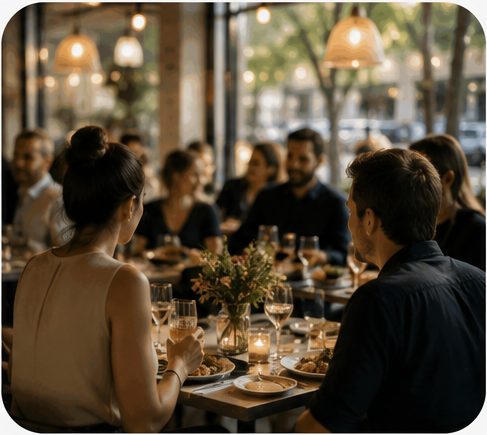
Restaurants have become places where people celebrate birthdays, reconnect with friends, or discover neighborhoods. Hotels are expected to create memorable stays rather than simply provide a room. Brand activations and pop-up events aren't just about generating leads. They're opportunities for people to experience a brand in a way they can't through an advertisement or website.
That's what makes physical experiences different.
People aren't only spending money.
They're spending time.
Time Is One of the Strongest Signals of Intent
Every brand wants to understand which customers are most likely to buy.
Online, that intent is relatively easy to measure. Someone views a product multiple times, abandons a cart, or returns to the same page throughout the week. Those behaviors tell marketers that the customer is interested, even if they haven't purchased yet.
Physical locations are full of those same signals.
Customers:
- Spend twenty minutes browsing before making a decision.
- Ask associates detailed questions about a product.
- Visit a store multiple times before buying.
- Attend an event because they're genuinely interested in the brand.
- Stay longer because they're engaged, not because they have to.
Those interactions reveal intent just as clearly as anything that happens online.
The difference is that most of them disappear the moment the customer leaves.
The Experience Often Ends at the Door
This is one of the biggest disconnects between digital and physical experiences.
When someone leaves a website, brands have countless ways to continue the relationship. They can recommend products, follow up after a browse session, recover an abandoned cart, or personalize the next interaction based on what the customer already showed interest in.
Most physical visits don't work that way.
A customer can have a great conversation with an associate, spend half an hour exploring products, and walk away with every intention of coming back. Another customer can attend a brand event, have an incredible experience, and never hear from that brand again.
Those moments are valuable precisely because they happened in person.
The problem is that they're often treated as isolated experiences instead of the beginning of an ongoing relationship.
Physical Experiences Need a Better Follow-Up
Creating a memorable in-person experience is only part of the equation.
The harder question is what happens next.
If someone takes the time to visit your store, attend your event, or dine at your restaurant, they've already done something meaningful. They've chosen to spend part of their day with your brand. That shouldn't become a forgotten interaction simply because they didn't buy something immediately or fill out a form before leaving.
The best physical experiences leave people wanting to come back.
They should also make it easy for the conversation to continue.
A Better Way to Continue the Conversation
Sotto was built around a simple idea: the customer relationship shouldn't begin at checkout.
A tap on the Phygital Cookie opens a direct SMS conversation while someone is still in the moment. Instead of asking customers to scan a QR code, complete a form, or join a loyalty program after they've already purchased, brands can start a conversation while curiosity and engagement are at their highest.
From there, every interaction happens in the same thread. A customer can ask a question after leaving the store, respond to a recommendation, or return weeks later without starting over. As those conversations continue, Sotto's Active Listening learns from what customers naturally share, helping brands understand preferences and intent without relying on surveys or preference centers.
The visit becomes more than a single interaction.
It becomes the first chapter of an ongoing relationship.