Where Loyalty Programs and Apps Fall Short
Where Loyalty Programs and Apps Fall Short
Brands have spent years investing in loyalty programs, branded apps, and digital memberships to strengthen customer relationships.
The idea makes perfect sense. Reward repeat customers, create personalized experiences, and give people a reason to come back.
The challenge isn't the goal. It's the amount of effort customers are often asked to invest before the relationship has even begun.
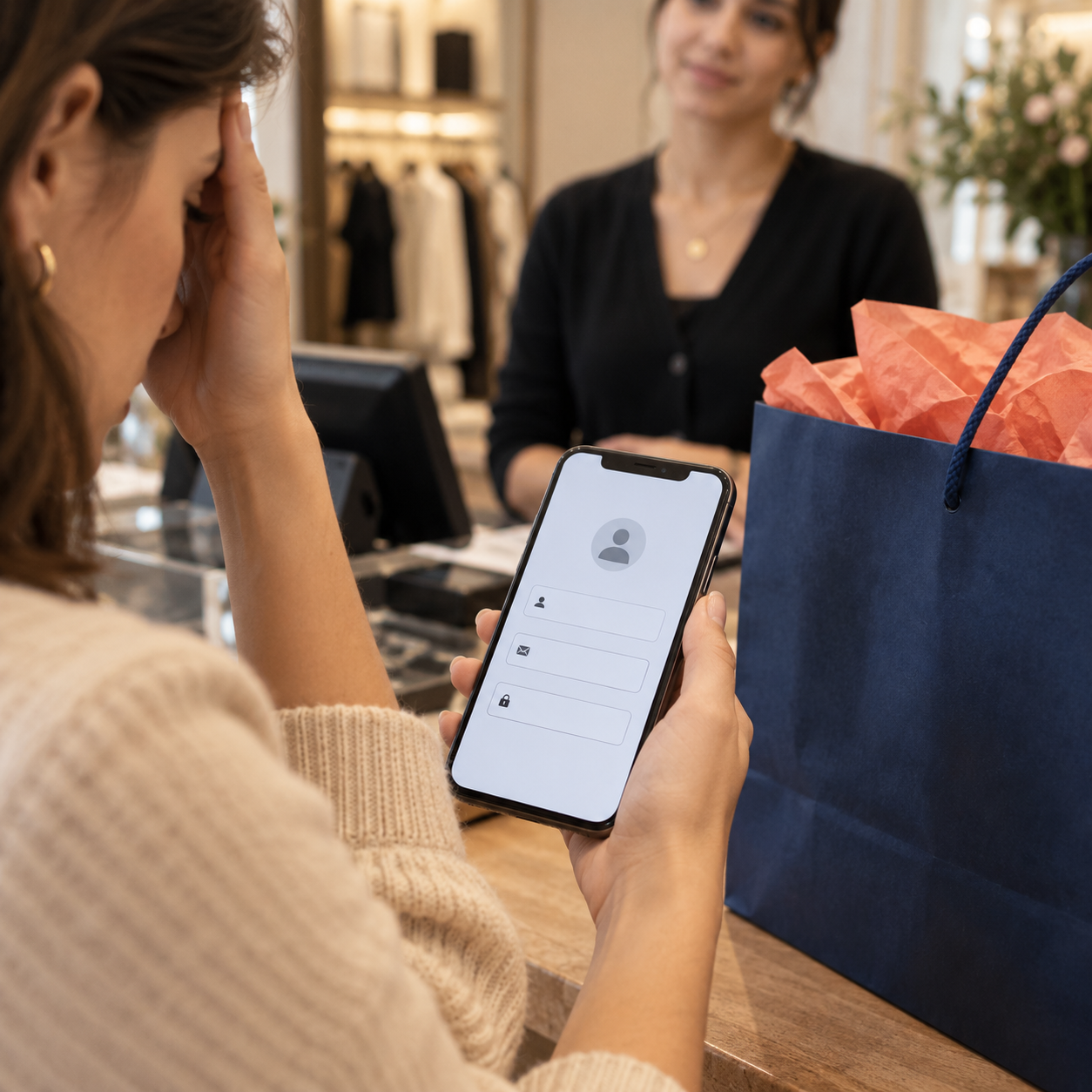
- Download the app.
- Create an account.
- Verify your email.
- Choose a password.
- Join the rewards program.
- Save a mobile wallet pass.
Only then can you begin earning rewards, receiving personalized offers, or interacting with the brand.
For someone who's simply walking into a store, attending an event, or visiting a restaurant, that's a surprisingly long list of requests before they've experienced any value.
Every Step Creates Friction
Most customers don't avoid loyalty programs because they dislike rewards. They hesitate because every additional step creates another opportunity to disengage.
Maybe they don't want another app taking up storage on their phone. Maybe they don't remember another password. Maybe they don't feel like completing a registration form while they're shopping. Even mobile wallet passes, which are much simpler than downloading an app, still require customers to stop what they're doing, save something they'll hopefully use later, and decide it's worth keeping.
None of those steps is particularly difficult on its own. Together, however, they create friction at the exact moment a brand should be making engagement feel effortless.
It's easy to forget that many customer relationships don't end because of a poor experience. They end because the experience never begins.
Loyalty Often Exists Before the Loyalty Program
Think about your own habits. You probably have a favorite coffee shop. A restaurant you recommend to friends. A retailer you always check first. A hotel you book whenever you're in a particular city.
You're already demonstrating loyalty. You simply may not be participating in the loyalty program.
Brands often think of loyalty as something that begins after enrollment. In reality, loyalty usually begins much earlier. It starts with positive experiences, convenience, trust, and consistency. A membership program simply formalizes a relationship that already exists.
The challenge is helping more customers reach that point.
Make the First Interaction Easy
The easiest customer interaction is often the one that asks people to make the fewest decisions.
Customers shouldn't have to decide whether to download an app, join a rewards program, save a wallet pass, or create an account before they've received something valuable. Those decisions can come later, after the brand has earned their attention.
Imagine instead that the first interaction is as simple as tapping your phone while you're already engaged with the brand.
That single interaction could:
- Unlock an exclusive offer.
- Start a conversation with an associate or AI agent.
- Answer a product question.
- Introduce a loyalty reward.
- Recommend products or services based on what someone is exploring.
- Continue the conversation after the visit.
The customer receives value immediately instead of completing a process first.
Better Relationships Create Better Loyalty
Many loyalty programs are designed around transactions.
- Spend more.
- Earn more points.
- Unlock another reward.
There's nothing wrong with that approach. Rewarding loyal customers is important, and well-designed loyalty programs can be incredibly effective.
But relationships aren't built on transactions alone.
Customers ask questions. Share preferences. Request recommendations. Seek assistance. Explore new products. Return because they had a positive experience—not simply because they're accumulating points.
Those conversations provide context that purchase history alone never can. Over time, they create a much richer understanding of what customers actually value.
Strengthening Loyalty, Not Replacing It
That's the thinking behind the Phygital Cookie. The goal isn't to replace loyalty programs or branded apps. Those tools continue to serve an important purpose for many brands.
Instead, the Phygital Cookie helps lower the barrier to entry by making the very first interaction effortless.
With a simple tap, customers can unlock a reward, ask a question, receive personalized recommendations, or begin an ongoing SMS conversation without downloading an app, creating an account, or navigating a registration process before they've received value.
As those conversations continue, Sotto's Active Listening learns naturally from what customers choose to share. Interests become preferences. Questions become context. Individual interactions become stronger customer relationships over time.
Customers who have meaningful, ongoing conversations with a brand are often far more likely to engage with loyalty programs later because the relationship already exists.
Rather than replacing loyalty, the Phygital Cookie helps brands introduce more people to it. It makes participation easier, encourages deeper engagement, and creates a larger community of customers who are connected to the brand long before they ever earn their first reward.
The best loyalty programs don't begin with enrollment. They begin with an interaction that makes customers want to come back.